
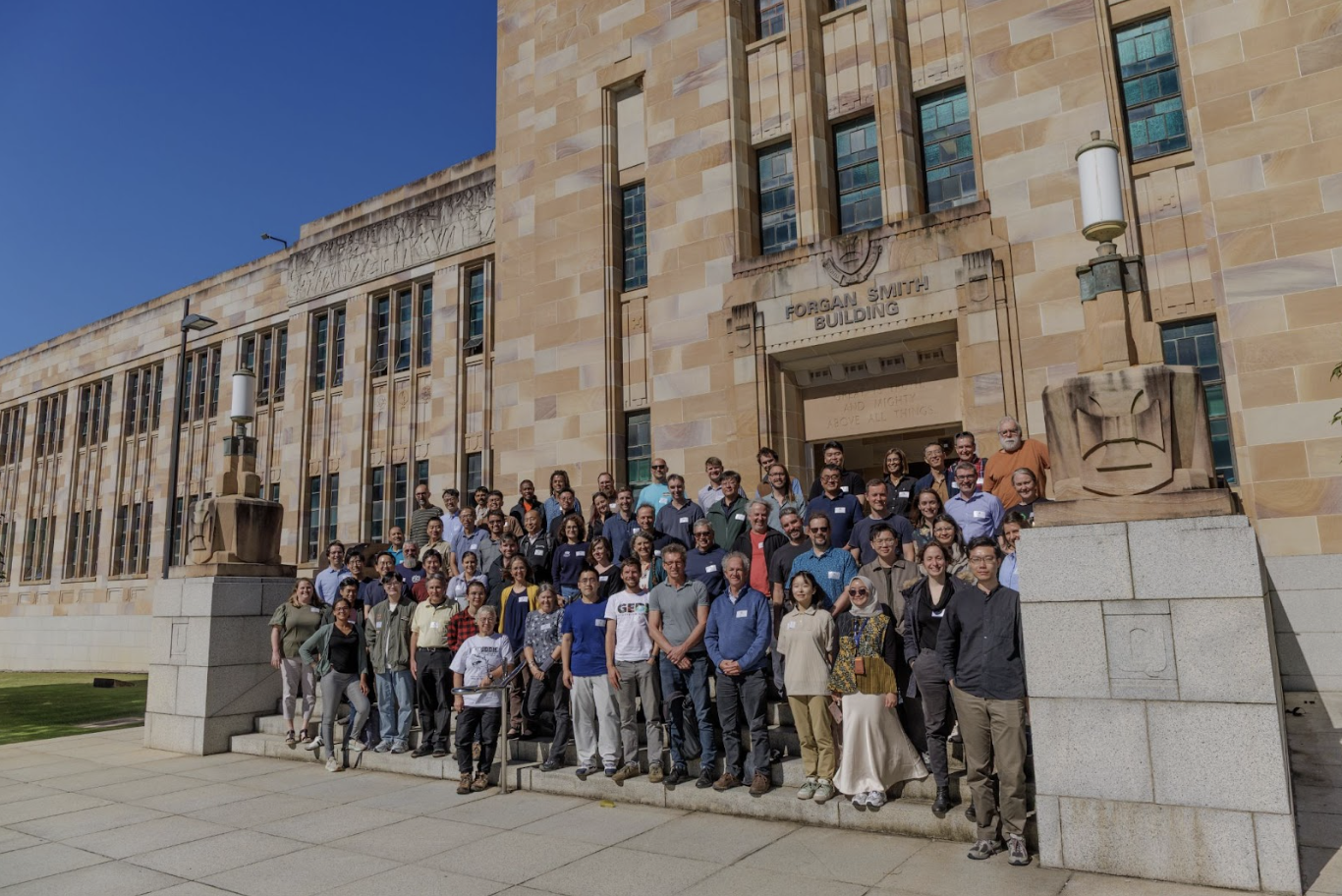
Enjoy a funny explainer on what happens at science conferences, with soundbites from the 2025 FLUXNET Meeting in Brisbane, Australia.
Transcript
Jess: So, what happens at a science conference? Scientists present the research that they’ve been working on for the past year or so. They share the things that they’ve learned, questions they have, and what they plan to work on next. But even scientists get nervous sometimes – it’s not easy presenting to a room full of your peers!
Soundbite: [compilation of presenters saying “um”]
Jess: Scientists share things about their home countries, or wherever they’re currently working, that other attendees might not have known before.
Soundbite: An oil palm can produce work throughout the year.
Jess: They share fun facts about current issues or hot topics in their localities…
Soundbite: Just for reference, the history of this state in Australia, we have a relatively well-established carbon offset market. Now, we have a developing carbon inset market.
Jess: …and motivations behind their current research questions.
Soundbite: Gross primary product[ivity] is the most important biological process in our lives because it is related with climate change and also, the global carbon cycle. However, tropical regions, including my home country of Indonesia, which has the strongest photosynthesis in the world, is underrepresented. Evergreen broadleaf forests are also still underrepresented in the flux tower network.
Jess: People fill their schedules with seminars, networking events, and workshops from morning until night. Some will try to sneak away to check their emails, go for a jog, or take a power nap – but others are too excited about learning more to miss out on even a second!
Soundbite: Hi everyone. Thank you very much for getting out of bed early to come listen to this.
Jess: You’ll hear many of the same keywords or terms used by scientists in a specific field of study…
Soundbite: What is agricultural drought and agricultural water stress? I don’t think that we have a very good definition for drought itself, but a very simple definition for agricultural drought is when there is insufficient soil moisture to support crop growth.
Jess: …but you might also learn some new ones.
Soundbite: Directional changes over time in ecosystem fluxes that deviate from a previous trend characterized by shifts in the relative importance of environmental drivers or in their relationships with the fluxes – this is emerging dynamics.
Soundbite: We will perform spatiotemporal fusion to generate data both spatially and temporally.
Jess: Scientists will have the chance to ask questions about other scientists’ work that can help clarify new information or improve a study they might be working on back home.
Soundbite: How did you go about resolving the different sites?
Soundbite: Yeah, this is a very good question. Landsat provides some fine-resolution images. We can see the mixture of the landscapes which contain agricultural land.
Jess: That’s it for this minisode of “Meet the Fluxers”…
Soundbite: Thank you very much.
Soundbite: Thank you once again for the invitation. Thank you very much.
Soundbite: [applause]
Jess: …with soundbites from the 2025 FLUXNET meeting in Brisbane, Australia – also known as “Brizzie” by local residents.