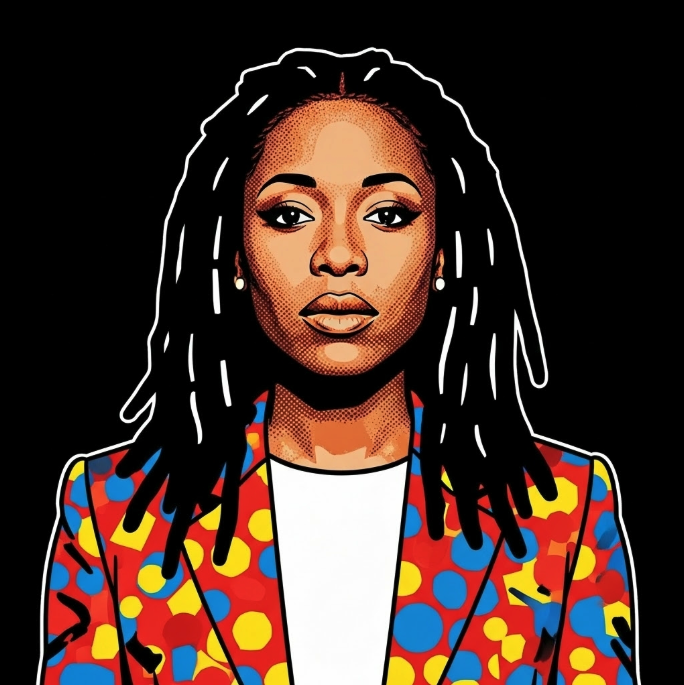
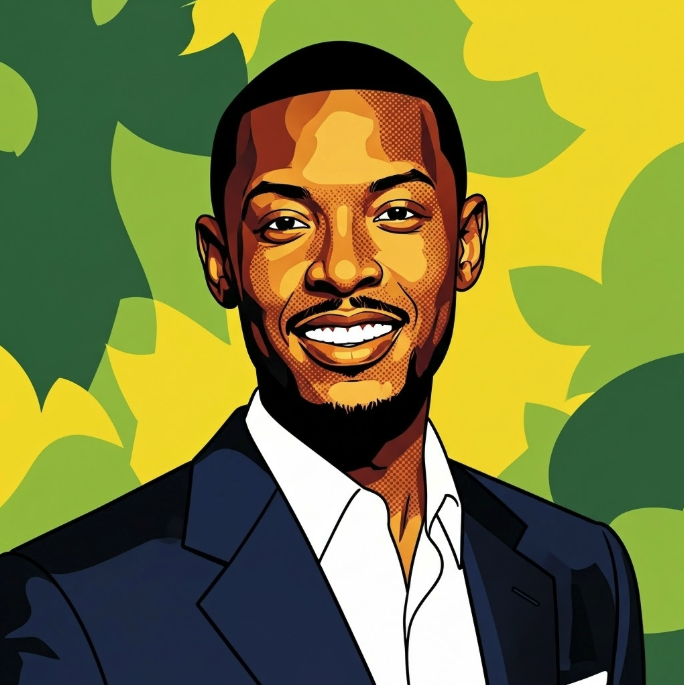
African scientists Oss and Amu offer listeners valuable insight on how to build and strengthen collaborative networks based on their own professional experiences in Bénin and South Africa. Together, they have overcome challenges, from language barriers to pandemic-related travel restrictions, to share their science with a broader audience. Their observational networks aim to produce new information about tropical climates, agriculture, and more.
Transcript
Jess: So, looking back at your years as a student, how did you become interested in flux science?
Oss: When I first learned how physics, especially fluid mechanics, can be helpful in describing natural processes which occur in our daily life, and fluxes described the movement of energy and matter across boundaries, it felt like seeing hidden patterns that organize nature. What gave me hope was realizing that it's real, how ecosystems or systems interact and transform.
Jess: Can you briefly explain what is WAF-Net?
Oss: WAF-Net is an original flux network established in 2024 in West Africa to coordinate activities of research groups which are involved in flux measurement in the region. The aim is to generate innovative solutions for West African societal challenges, fostering collaboration among researchers, addressing the regional shortage of institutional observations, and more importantly, nurturing the next generation of scientists.
Jess: It seems like you were inspired by the concept and the people behind AMMA-CATCH, the African Monsoon Multidisciplinary Analysis Couplage de l'Atmosphère Tropicale et du Cycle eco-Hydrologique, which is another long-term regional observatory. How did you make connections with people there, and how did they help or benefit your current research?
Oss: My involvement in AMMA-CATCH started during my Master’s studies with some general connection with scientists which are involved in AMMA-CATCH and also many African scientists. Many African countries in this collaboration have been essential for my research because they provide access to long term observational data that would not be possible to collect due to the lack of funding in Most African countries. Working closely with local scientists has also provided me with valuable insight into the socio-ecological context of data. And what I want to add to this is that beyond the data, these partnerships and collaborations have created opportunities for student exchange and co-authoring publications which have significantly enhanced the quality and visibility of my work.
Jess: So, Amu, what made you become interested in flux science? How did you get involved in maintaining the two flux towers?
Amu: So, I was brought in like a junior technician-type where I’d get some field experience in terms of the calibration and the routine maintenance of the towers. I would join them out in the field until the point where I started handling some of the data and running some of the post-processing routines that the group was responsible for. So, it's in those tasks that were gradually assigned to me that I was able to learn and gather interest in how this whole pipeline was being run. A couple of months later, this kind of interest that I was building up triggered a Ph.D. project that I had to undertake once I completed my masters. Initially it was designed for me to study in Germany, but this was the COVID time. It ended up being a year of me staying in Germany doing the data analysis of my Ph.D., and then upon my return to South Africa I would then finalize the completion of the project. As SAEON was getting into the deployment of new eddy covariance flux towers, my Ph.D. was kind of like a test project where we set up these 2 flux systems in Benfontein Nature Reserve. I started my data processing analyses and the Ph.D. took shape. Over the past year, then, I've been employed by SAEON. We have been in this co-management of the Skukuza flux tower. I am still very much involved in flux science, which started really about 4-5 years ago.
Jess: Can you briefly explain what is SAEON?
Amu: The South African Environmental Observation Network, SAEON, is a national research facility. We monitor and study these long-term environmental and ecosystem changes across South Africa's terrestrial, freshwater, and marine systems. We operate through a network of observations that are called nodes, and these collect ecological, climatic, and biodiversity data that can ultimately support scientific research, education, as well as policy in the country. Within SAEON, there's research infrastructures that are currently hosted and FT-1, the one that I currently work for, is one of them.
FT-1 is the expanded freshwater and terrestrial environmental observation network. It is a large-scale research infrastructure program that provides instrumented landscapes across key biomes in the country to monitor ecological processes such as carbon and water and energy fluxes. It kind of integrates the environmental and socio-ecological data that can enable us to support climate change research, as well as ecosystems management and sustainable development. It is based upon 5 themes, being atmospheric sciences, hydrology as well, biogeochemistry, we also have an outlook on the biodiversity and track the changes across time, as well as understanding the socio-ecological systems idea that is embedded in much of our ecosystems since much of them are really providing resources to the communities that live in these systems. Trying to link all this with this long-term forecast has been the work that FT-1 is tasked to do in the country. This is funded by the government of South Africa, where we really are trying to provide a platform that is going to facilitate research in the country. There's a team of scientists with a team of technicians that are responsible for all these teams. The landscapes are kind of replicated across the country. We currently have 6, representing much of the biomes in the country. The work has been ongoing for the past 6, 7 years.
Jess: Wow, those are some big aspirations.
Amu: Exactly. I mean, what then happens is that these platforms are producing open data. So, we really are starting to attract scientists from universities, even from other institutes, coming into our landscapes, contributing to the questions that are of interest to us. And this is really quite a platform that is shaped to advance ecosystem sciences in the country. It's going to be very interesting going into the future.
Jess: What challenges have you faced in bringing together scientists over such a broad region? What skills have helped to make a positive change within these networks?
Amu: I think I'd like firstly to recognize the wonderful work that is done by many scientists on the continent. Even under very constrained resources, I think it's always encouraging coming across colleagues on the continent and learning about the research that they've been involved in. The major challenges really have been on a continental level. We have struggled to know who does what, and where that is being done, since much of our efforts are not really centrally coordinated or made public on platforms that can bring us all together. So, I think it becomes quite difficult to knock on the correct doors. That has kind of been a limitation in terms of how we advance our science and collaborate as countries. The National Research Foundation in South Africa has been quite involved in forming these strategic partnerships between countries and I think we are starting to see some of those fruits coming through quite importantly.
On a personal basis, Fluxcourse 2023, that’s where I met Oss. It kind of helped bridge some of the work that she's been involved in in West Africa and what I’ve also been involved in in South Africa. Through further engagements, we’ve been able to then bring in some of our other colleagues and form these relationships that can help us when we, maybe, set up a proposal, when we maybe have students, or can just start seeing how we bring in some of our data for model verification, and try to really expand on these budding relationships that we are starting to see. We still continue facing challenges regarding how we market our data, and how we run a comprehensive student pipeline and capacity-building as a continent. I mean, I wouldn’t want to say that the diversity that we have as a continent is a challenge, but it does present a language barrier, as an opportunity for us to climb. At a continental level, there's really many more opportunities that are…are yet to be taken up. But locally, as a country, in South Africa we really have been resting on the backbone of our universities and how they kind of bring in the scientific community. The research institutions are starting to talk to each other and kind of create platforms where we know who does what where. That can kind of help us optimize some of the efforts that are in the country.
Jess: Oss, you had mentioned previously that, yeah, you also found it valuable to meet other scientists or network. Can you tell that story?
Oss: I met Amu during Fluxcourse in 2023, and also another scientist in 2024 at AGU. We started discussing some things in West Africa. When talking about the West African Flux Network, WAF-Net, I can say that one of the biggest challenges is bringing our scientists who are working in flux science over the region at the beginning was to coordinate with diverse regions. Also, setting up and maintaining research in a remote area, because this required - especially when equipment must be adapted to local conditions and also where there is no electricity in place at a site, it must be established. Communication also can be slow or have no access. That is the kind of training session, and also, in-person you will have help understanding the equations. All of these challenges, we are overcoming them. It has strengthened the network and hopefully this will improve the quality and impact of research in the region.
Jess: What aspects have been the most important for building and maintaining a successful scientific network?
Oss: Okay, I think funding is something that is present everywhere, but in addition to the funding, I think the most important aspect of a successful scientific network is clear communication - a shared vision. Also, trust among members, especially when those scientists which are involved in the network have not been working in the past together. In addition to this, building capacity by increasing the numbers of or supporting scientists. We have to ensure the network is sustainable. We have also to be flexible to adapt to challenges. And when these great pillars come together, the network can collaborate effectively, share data efficiently, and produce, I think, high quality and impactful science.
Jess: What research questions are WAF-Net and SAEON aiming to answer now, or in the future?
Oss: Agriculture is the most practiced. It comes to many countries trying to see how flux science can link into the precipitation changes and also how ranges changing affect these feedbacks. If we…we were able also, from the data which are currently collected, to try to identify some practical decision making for agriculture, this would be really helpful.
Jess: And when you are deciding on research questions to pursue, how do you choose, which topics?
Oss: Good question. If you get funding, it is easier to undertake more challenging research questions. When we started studying atmospheric turbulence, at the moment, data were there and it was the easier topic that we could undertake at this moment, was to try to understand how atmospheric turbulence, those things, behaved in West Africa. Another aspect was related to air quality, but this topic we are not too much involved in at this moment in Benin, but in other countries, there are many scientists who are working on this. So we just said, “Okay, we have a lot of data which are available. What can we do as research without funding?” We moved to other topics such as carbon fluxes and how to…trying to understand the vulnerability of carbon fluxes. Because we got funding, they were…we were able to support the young research, the young research scientists, we supported during their travel and so on. So, funding is very important to understand more challenging questions.
Jess: Is there any human-wildlife conflict that any of your sites with large predators?
Oss: Yeah, but it's more in the in the northern country…northern part of the country, the border with Burkina Faso and Niger, and at this place we do not have an eddy covariance site. Our sites are more located in the south. We are running this week a conference at our university for those who are working on ethno…ethno-something, I think how human beings can affect the those things and also, which kind of actions they are trying to set up to protect animals. There are some things, but I'm not too much involved in this kind of topic, so I cannot say. But there are there are some studies, respected studies, and they work a lot in South Africa.
Jess: One of your sites was oil palm, right? Is that used locally, or is that something that's produced en masse?
Oss: Yeah, that we have, we use it locally but the production is more for exportation.
Jess: How do SAEON and WAF-Net plan to attract more scientists into the network and encourage them to share their data, or is it something that just naturally happens?
Amu: Since much of our work is publicly funded, our data is also open. There's great interest in our data locally, where we are attracting quite a large pool of postgraduate students as well as scientists to our platform. This is kind of helped co-create many research projects and I don't think this has just been a natural happening with the kind of problems that we are facing as a continent. Being able to engage with universities, with research institutions, being involved also in these international networks such as FLUXNET or global ecosystem research infrastructure, as well as being part of the international long-term ecological research network, those are kind of the platforms that enable us to market our data.
As an organization, I think the use of our data is really our currency, so we kind of need more platform users so we…we, we can be able to kind of maximize on the science that we are producing as a country. Being part of these large networks kind of helps us to follow these international best practices in terms of how we design our network and how we handle our data. This pushes us then to be able to ensure that our data usability is fit for papers, and we can start contributing to these global analyses or syntheses. It's with platforms such as even this one, the Meet the Fluxers, where we are promoting our work in the hope that it reaches and lands in the correct hand and ears. And we can then start seeing these co-benefits of being able to attract the funding at times, or even just the collaborators we need to kind of advance the science that's happening in the country. There are already communications that are happening between South Africa and Benin with Oss there. We really are starting to create this contact list that is going to ensure that we…we come together as a continent, and we are able to really maximize on our platforms and come together as researchers. So, when we contribute globally, it is not only South Africa that's involved but we have Benin, we have Kenya, we have Zambia. We have all these African countries also being part of where the science is being directed to.
Jess: Oss, do you have anything to add to that?
Oss: Naturally, when there is a collaboration to get the output is a kind of natural growth in participation. When scientists engage in a joint project, they share naturally finding the value of open data and all of these lead to the extension of networks and strengthening the scientific community collectively, their knowledge and impact.